
Discover · Culture
The Story of Kurma
A taste with a history.
Where Kurma comes from, how it travelled, and why it has always been a food made for sharing.

Some foods don't need reinventing. They simply deserve introducing properly. Kurma is one of them, a snack so woven into Trinidadian life that, on the island, it needs no explanation at all.
A snack carried across an ocean
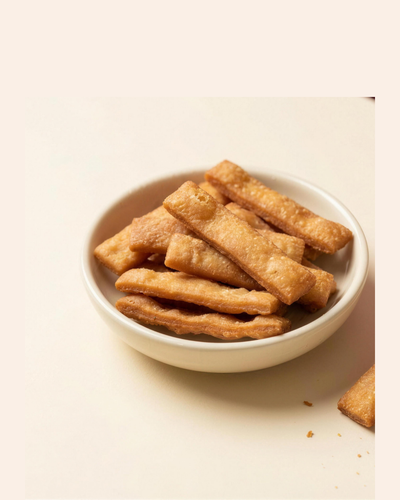
Kurma arrived in the Caribbean with the indentured labourers who travelled from India to Trinidad through the 1800s. They brought their faith, their festivals and their kitchens, and among the recipes was a simple fried-dough snack, glazed in spiced sugar. Over generations it settled into its new home and became something distinctly Caribbean: lighter, crisper, and perfumed with the warm spice of the islands.
A hospitality food
In Trinidadian homes, Kurma is what you reach for the moment someone walks through the door. It belongs to Diwali and to Christmas, to weddings and to ordinary afternoons with a pot of tea. It is rarely eaten alone and never in a hurry. It is made to be shared, passed around, lingered over. To offer Kurma is to say: stay a while.
From a family kitchen to yours
We grew up on this snack, the Trinidadian Kurma that meant home, festival days, and an open door. Years later, and a long way from where it began, that same recipe found its way to a small kitchen in Gloucester. We make it the way we remember, in small batches, by hand, so that a taste of Caribbean hospitality can find a place at British tables, too. Not to change it. To introduce it, properly.
We didn't want to reinvent Kurma. We wanted to introduce it properly.
Rachel & Kezia, founders